A single shelf of unlacquered brass above a narrow butcher block can reorient a whole galley. The small kitchen asks for decisions that are both practical and precise, where every centimeter earns its place through function and material character.
These are not sweeping renovations but small interventions, each chosen for its ability to add purpose without clutter. The logic is simple: a detail that solves one specific frustration, quietly, without demanding attention.
A Lip on Open Shelving
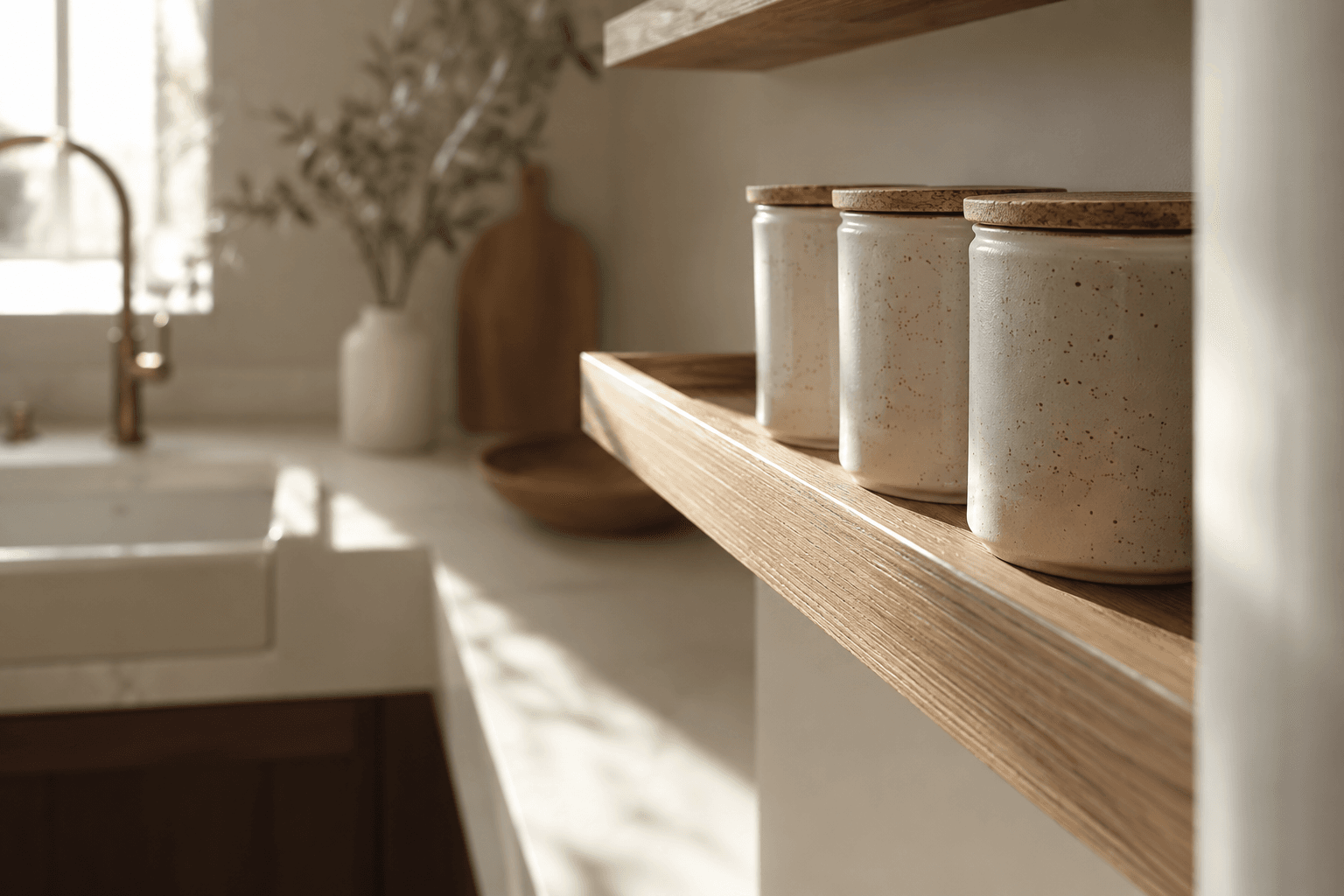
Open shelving in a small kitchen often trades dust for display. A subtle lip along the front edge, barely a centimeter high, catches errant spice jars before they tumble. In white oak or painted to match the wall, it allows for deeper shelves without the visual weight of a guard rail. The change is near invisible but transforms storage confidence. Best for the wall above a prep sink where jars are reached daily.
Magnetic Knife Strip on Tile
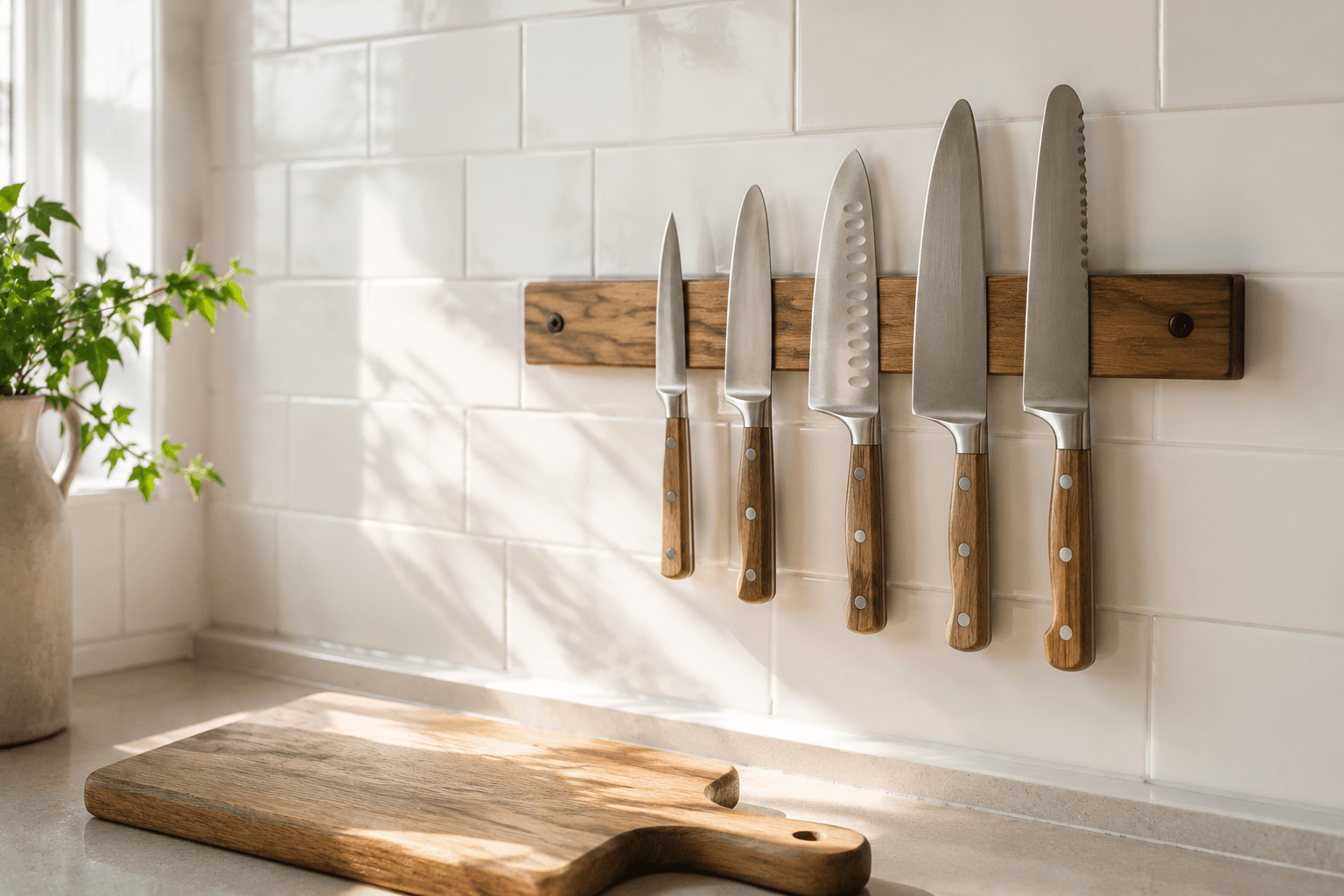
A knife block eats counter space. A magnetic strip mounted directly on the backsplash tile reclaims it. Choose a slim strip in matte black or stainless steel, positioned within arm's reach of the cutting board. The knives become a linear composition against the tile pattern, a practical mosaic. The key is to align the strip with the grout lines for a deliberate look. This one change frees an entire corner of prep surface.
Under Cabinet LED Strip
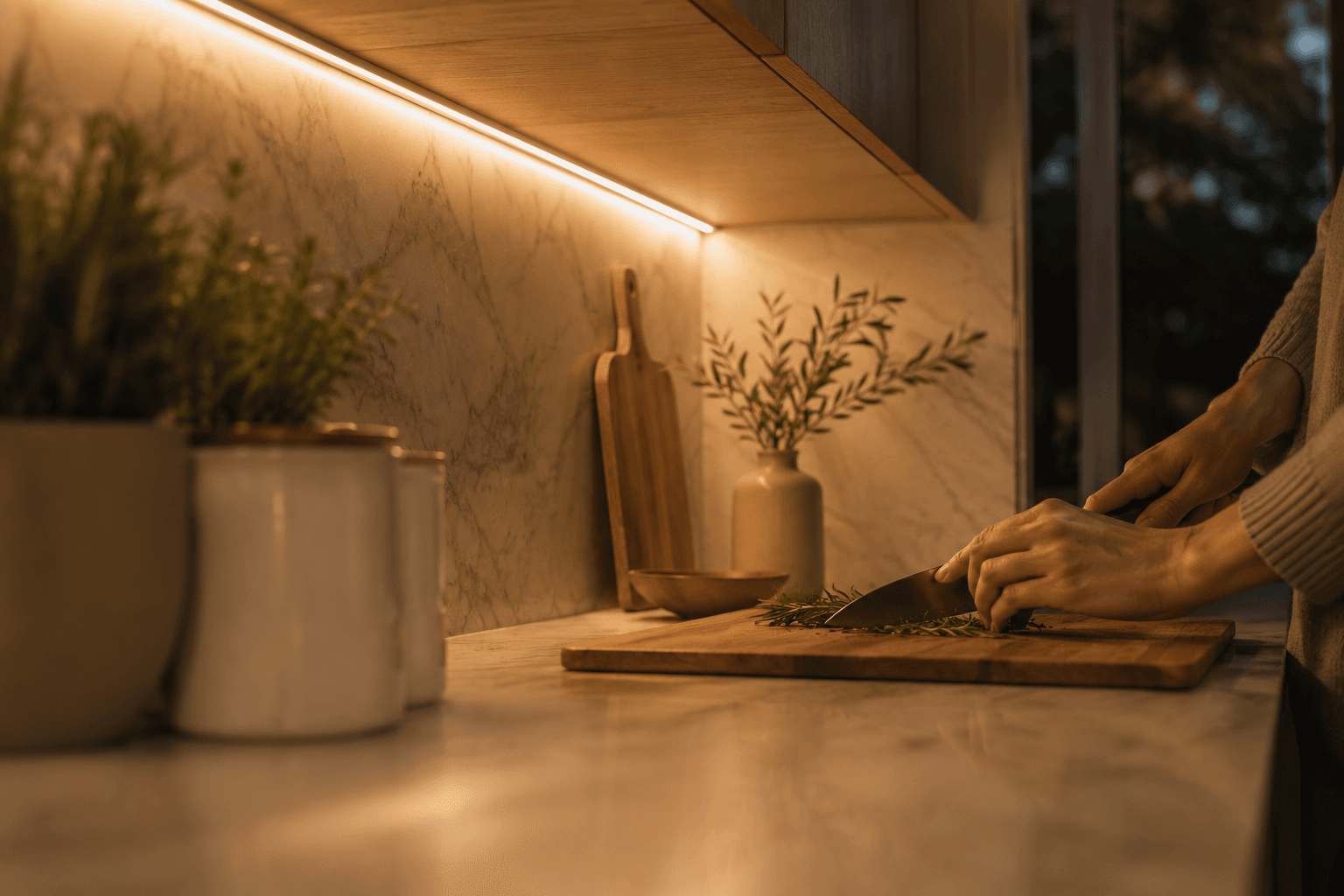
Task lighting is the most underrated upgrade in a small kitchen. A thin LED strip adhered under the upper cabinets eliminates shadows on the counter, making food prep safer and the space feel larger. Choose warm white at 2700 kelvin for a soft glow that reads as daylight in a compact room. The strip is near invisible when off, but on it draws the eye to the work surface, not the clutter above. A simple plug-in model installs in ten minutes.
Pegboard With Hooks
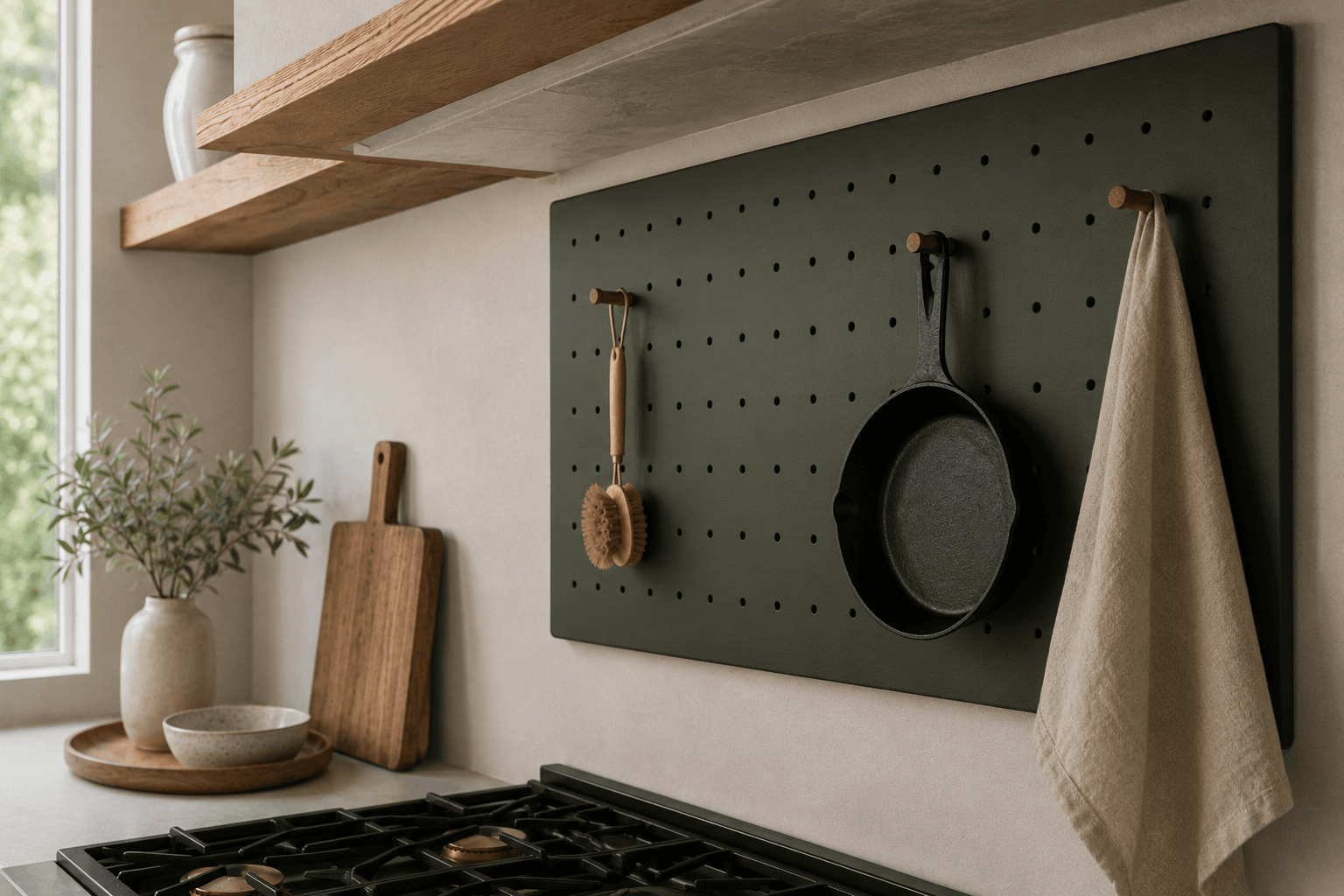
The pegboard returns in a quieter form: painted the same color as the wall so it disappears when empty. A single board above the stove holds the heavy items, a cast iron skillet, a spider strainer, a ladle, each on its own peg. The composition shifts as tools are swapped, making the kitchen feel alive. It solves the problem of crammed drawers and adds a graphic element. A coat of matte black or deep green turns utility into wall art.
Pull Out Cutting Board Beside Stove
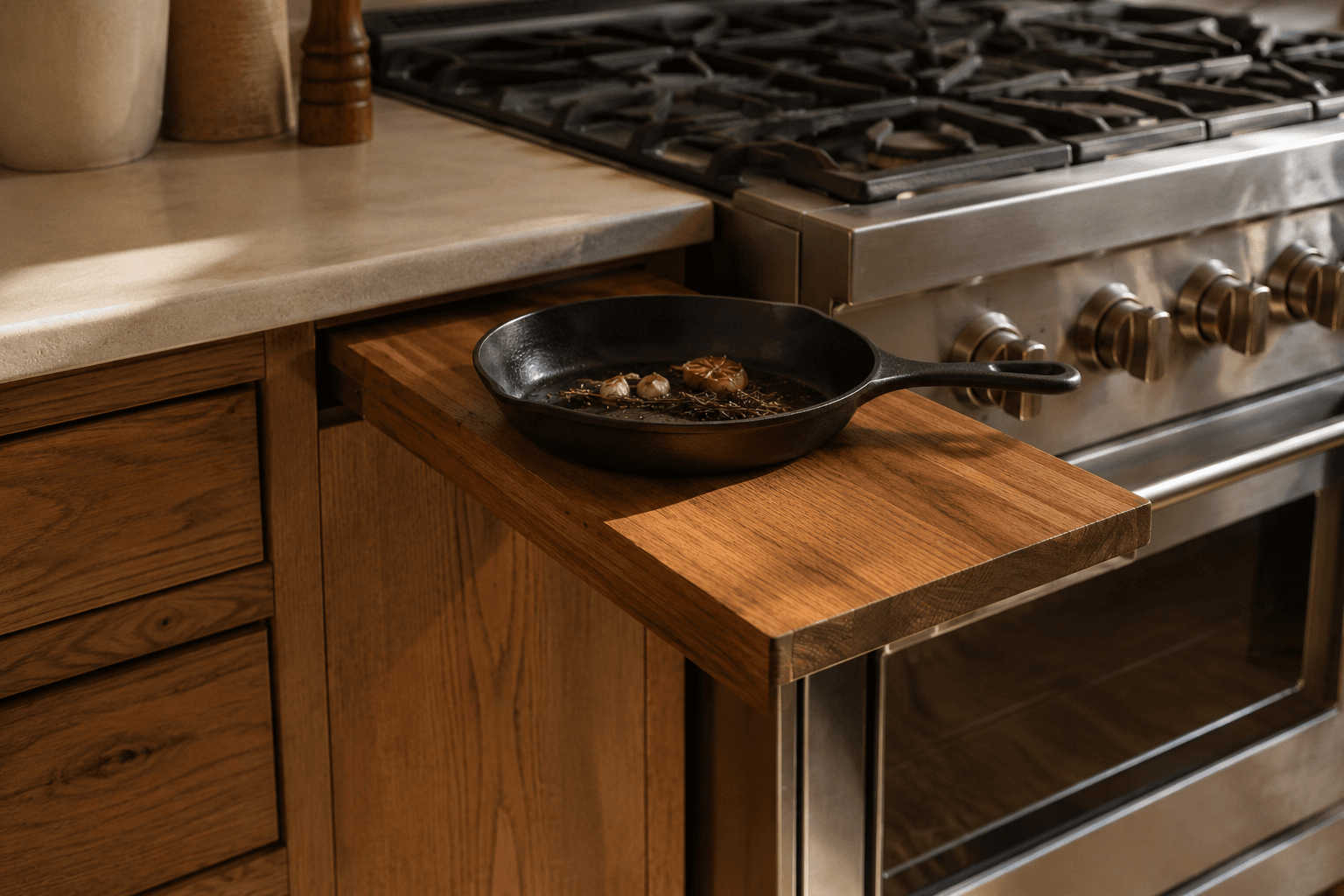
The gap between stove and counter is often wasted. A pull out cutting board, fitted into a slim slot, extends the prep surface exactly where you need it, beside the burners. In thick teak or end-grain maple, it doubles as a trivet for hot pans. The mechanism is a simple full-extension drawer slide, smooth and silent. This is the most practical small kitchen idea for anyone who cooks daily, adding a foot of usable counter without a single square inch of new footprint.
Narrow Rolling Cart as Moving Island
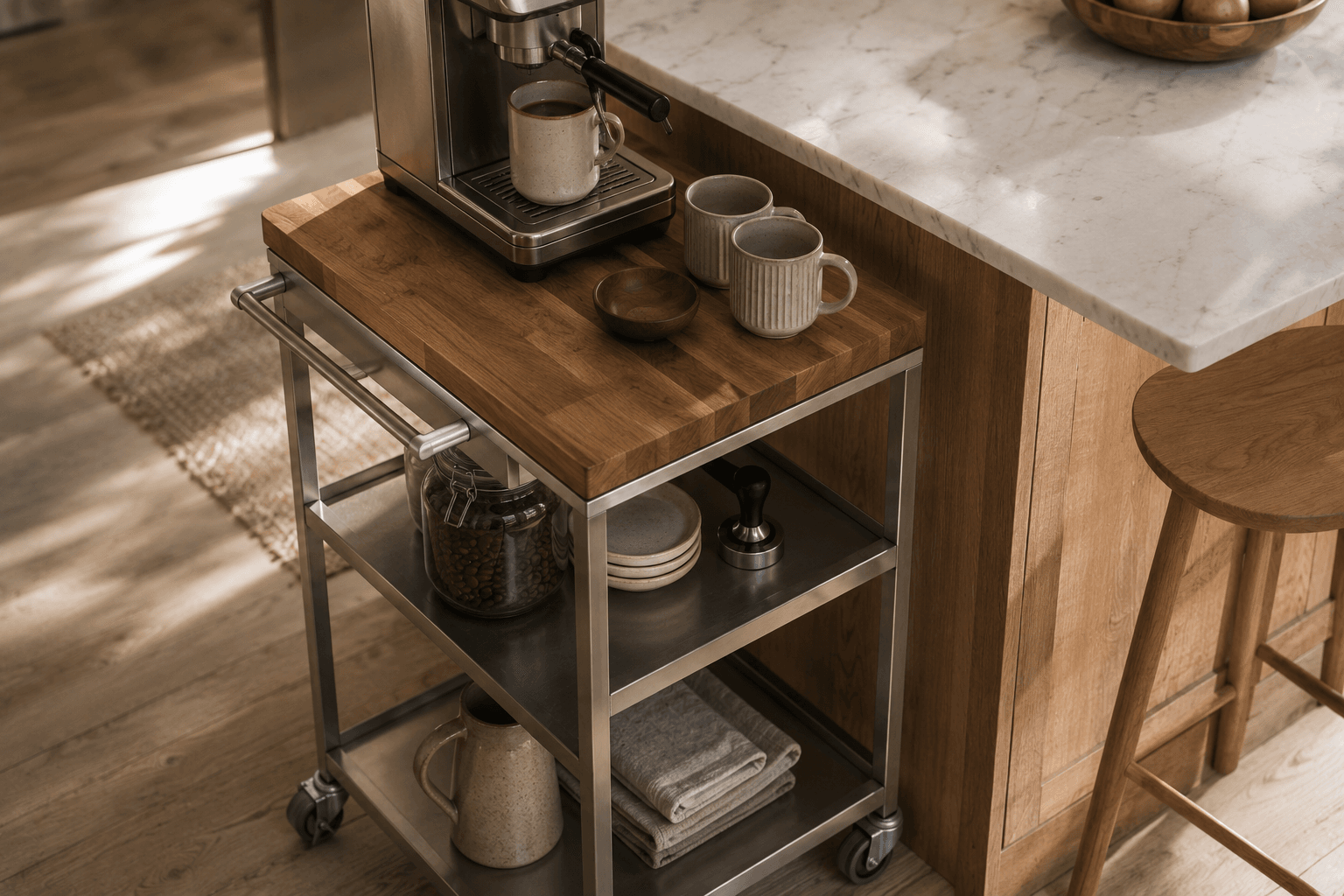
A small kitchen rarely has room for a fixed island. A narrow rolling cart, the width of a single cabinet, provides a flexible surface. In stainless steel with a wood top, it holds the coffee station by morning and becomes a pastry bench by afternoon. The wheels lock for stability and release for storage against the wall. The design logic is simple: movable storage that adapts to the meal. Choose one with a lower shelf for baskets of onions and garlic.
Hanging Pot Rack Over Prep Zone
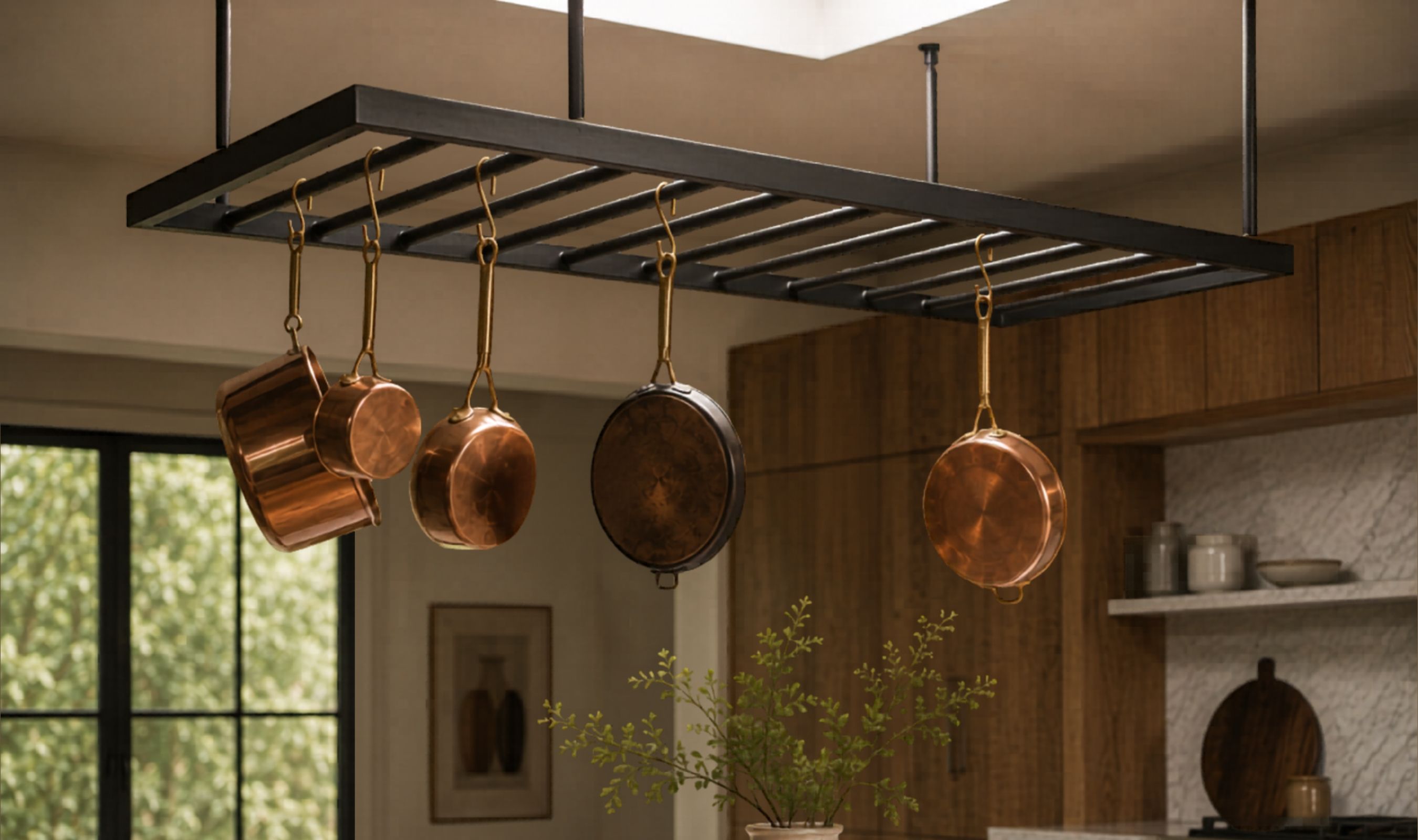
Pots and pans stacked in cabinets create a frustrating game of Jenga. A ceiling-mounted rack over the prep zone keeps the most-used cookware within a single lift. In wrought iron or brushed steel, it hangs low enough to reach but high enough to clear shoulders. The rack turns heavy stainless or copper pots into a visual rhythm. It frees cabinet space for dry goods and small appliances, and the prep zone gains an air of professional efficiency.
Slim Spice Drawer Beside Range
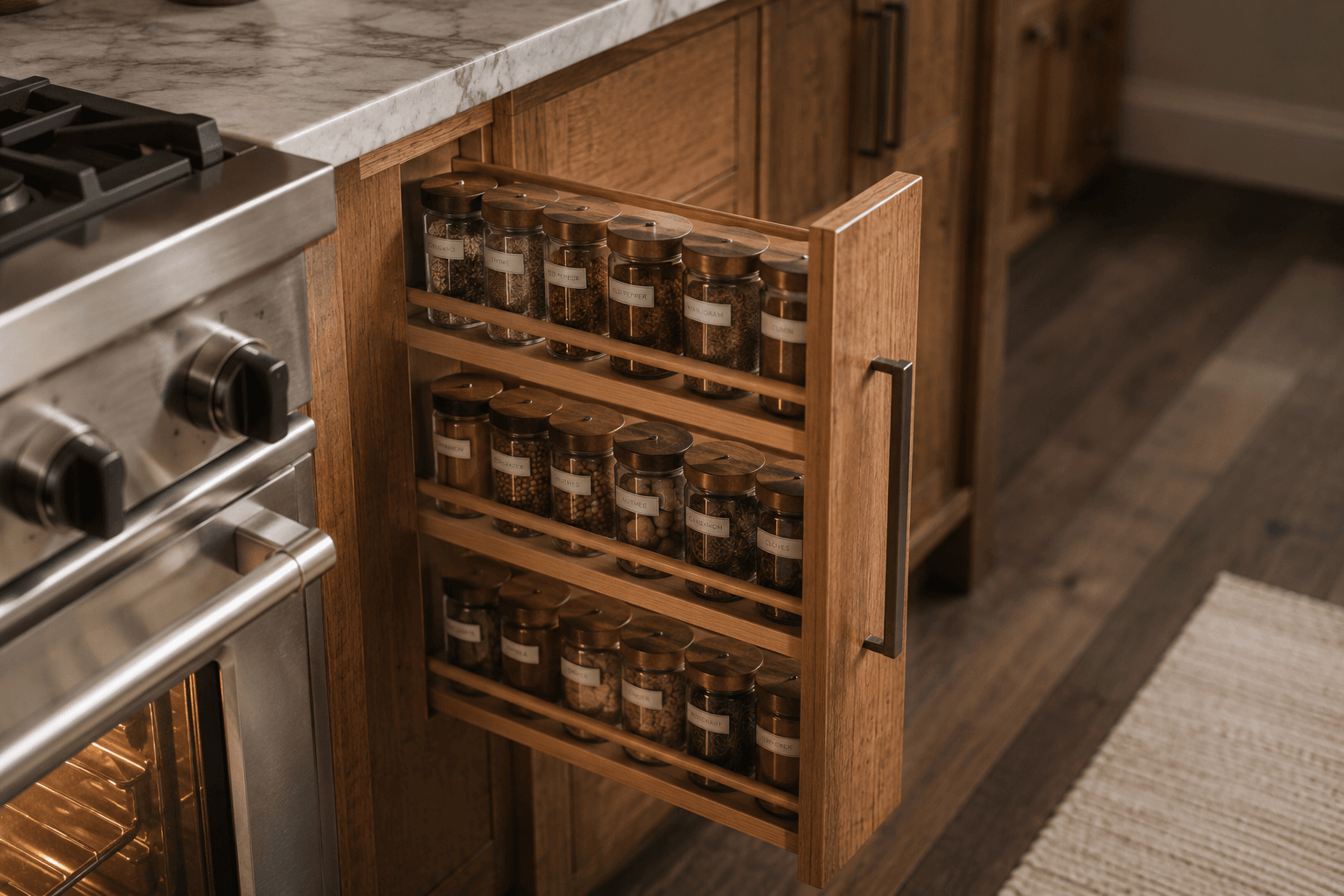
Spice jars in a cabinet become a chaotic tumble. A narrow drawer, just deep enough for a single row of bottles, fitted beside the range keeps the collection organized by height. The drawer is shallow, 10 centimeters, so nothing stacks. Labels face up, visible at a glance. This piece requires custom cabinetwork but is the most ergonomic solution for a cook who reaches for cumin or smoked paprika mid-simmer. The drawer's slim profile uses otherwise dead space.
Corner Lazy Susan for Deep Cabinets
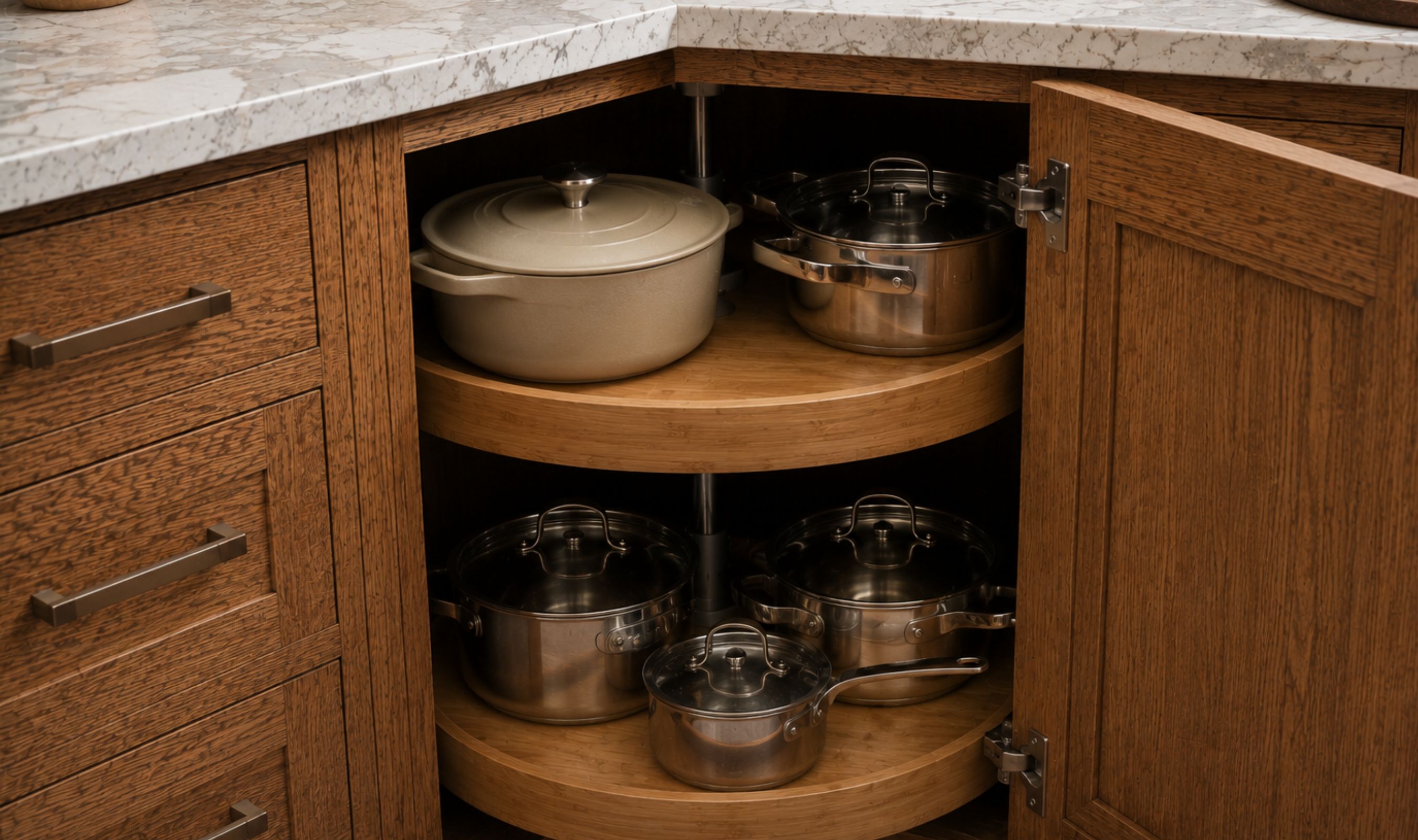
Corner cabinets are the black hole of small kitchens. A two-tier lazy Susan, sized to the cabinet diameter, retrieves every pot lid and oil bottle without contortion. The key is the material: a sturdy metal or bamboo tray that rotates smoothly. Position the heaviest items on the lower tier, lighter dry goods above. This is not a glamorous solution, but it transforms dead space into the most efficient storage in the kitchen. No more kneeling and searching.
A Single Pendant Over Sink
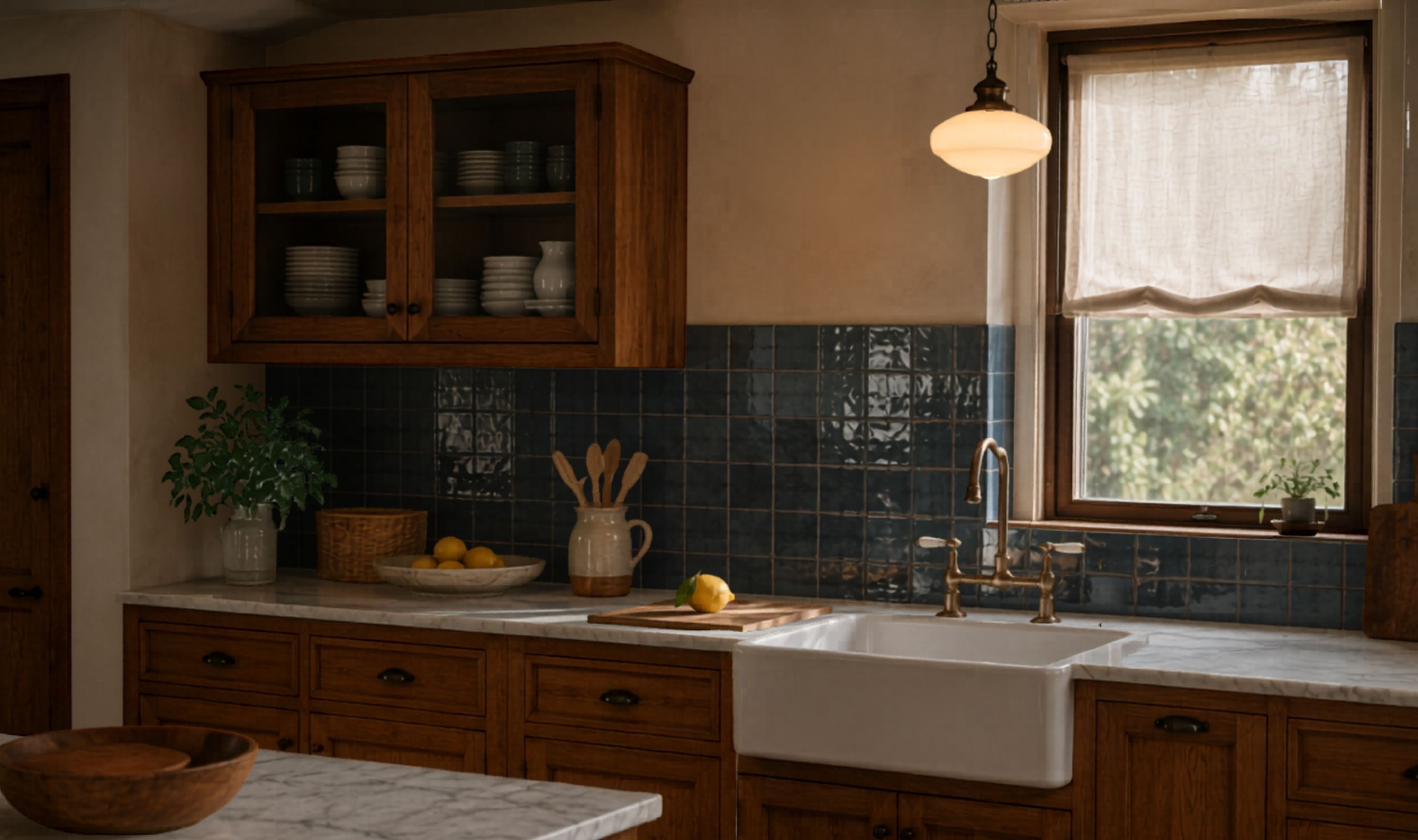
The sink is the most used workstation in a small kitchen, yet often lit from above by a generic ceiling fixture. A single pendant, hung low over the center of the basin, casts focused light where you need it for washing vegetables or soaking dishes. Choose a shade in opal glass or brushed brass, 30 centimeters in diameter, hung 75 centimeters above the rim. The pendant becomes a sculptural anchor in a narrow room, and the task is finally lit with intention.
Start with the corner that frustrates you most. Measure the gap beside your stove and order a pull out cutting board, it will cost less than a dinner out and add more function than any cabinet reorganization.